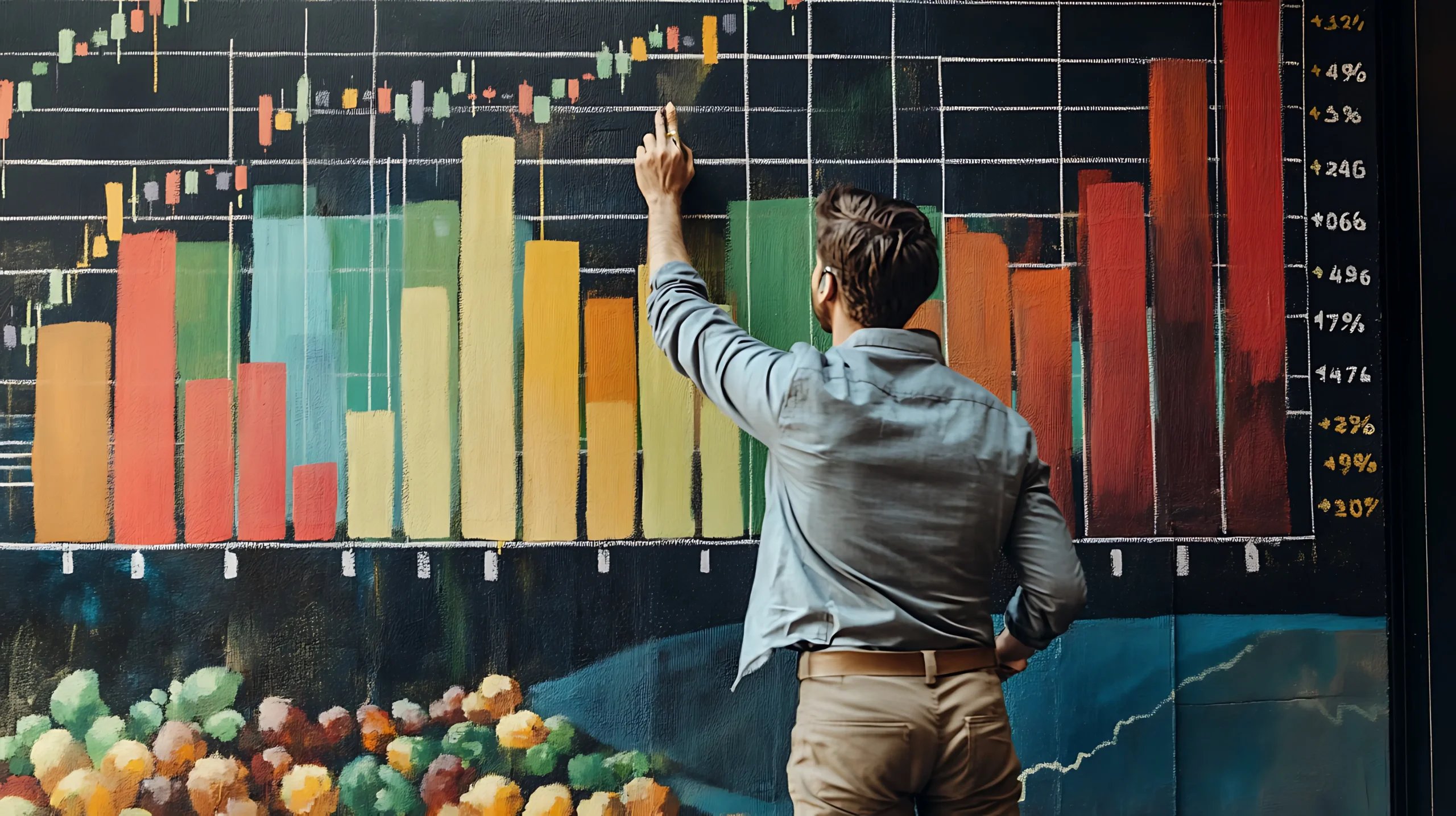
Stock indices represent a group of companies combined into a single market benchmark. Instead of tracking one company, traders follow an index to understand the performance of an entire segment of the economy. Learning stock index trading basics helps traders interpret broader market direction.
Indices are widely used by investors, institutions, and analysts because they provide a quick overview of market sentiment. When major indices rise or fall, they often reflect changes in economic expectations and investor confidence.
Let’s learn more!
What A Stock Index Represents
A stock index measures the collective performance of several companies grouped together under a single indicator. These companies are usually selected based on market size, industry representation, or economic significance.
Many traders analyze indices through our trading platform, where chart tools allow users to track price movement and compare global market benchmarks.
Why Indices Are Important
Indices play a central role in financial markets. They help investors understand how large parts of the economy are performing without analyzing every individual company.
Common reasons traders follow indices include:
- Measuring overall market performance
- Comparing sector or regional economic growth
- Identifying investor sentiment trends
- Tracking global market movement
- Benchmarking portfolio performance
These functions make indices essential indicators of broader market sentiment.
How Index Values Are Calculated
Index values are calculated using the market performance of their underlying companies. Different indices use slightly different formulas depending on their methodology.
Most modern indices rely on market capitalization weighting, meaning larger companies influence the index more than smaller companies.
Note: Because larger companies carry more weight, major corporate movements can influence the entire index.
Major Stock Indices Around The World
Global markets contain many indices that track different economic regions and industries. Some indices focus on large multinational corporations, while others track specific sectors.
Global Indices Traders Watch
Several stock indices have become widely followed benchmarks in global financial markets.
The following table highlights several important indices and their characteristics.
| Index | Region | Major Sector Exposure | Market Focus | Typical Traders | Economic Role |
| S&P 500 | United States | Technology, Finance | Large US corporations | Institutional investors | US market benchmark |
| NASDAQ 100 | United States | Technology companies | Growth-oriented firms | Tech traders | Innovation-driven index |
| FTSE 100 | United Kingdom | Energy, Finance | Major UK corporations | European investors | UK economic indicator |
| Nikkei 225 | Japan | Industrial and tech | Japanese corporations | Asian traders | Japanese market benchmark |
| DAX 40 | Germany | Manufacturing, exports | German industrial firms | European traders | EU economic indicator |
| Hang Seng | Hong Kong | Financial services | Asian market companies | Global investors | China regional indicator |
Understanding these indices helps traders evaluate global market trends more effectively.
Regional Market Influence
Although each index represents a specific market, global financial systems are closely connected. Movements in one region often influence trading activity in other regions. For example, strong economic data in the United States may influence European or Asian indices due to global investor sentiment.
Tip: Watching several indices together can provide better insight into global market direction.
Methods Traders Use To Analyze Indices
Index traders typically rely on both technical and fundamental analysis. These approaches help interpret price movement and broader economic conditions.
Technical Analysis For Indices
Technical analysis involves studying price charts, indicators, and trend structures to evaluate market direction.
Traders often look for signals such as:
- Trend formations showing higher highs or lower lows
- Support and resistance levels where prices react
- Momentum indicators confirming trend strength
- Breakout patterns signaling potential new trends
- Volume changes indicate market participation
These signals help traders recognize index trend patterns and evaluate potential trade setups.
Fundamental Factors Affecting Indices
While charts are useful, economic conditions also play an important role in index performance.
Important factors influencing indices include:
- Economic growth and employment reports
- Interest rate decisions by central banks
- Corporate earnings from major companies
- Inflation levels affecting investor sentiment
- Geopolitical developments influencing global markets
These factors contribute to macro market analysis, which helps traders understand broader economic conditions.
Alert: Index volatility often increases during major economic announcements or central bank decisions.
Risk Considerations When Trading Indices
Although index trading can provide diversified exposure to many companies, risks still exist. Market downturns can affect entire indices when economic sentiment weakens.
Traders usually apply risk management strategies such as limiting position size and defining exit levels before entering trades. Maintaining disciplined risk control helps traders remain active even during volatile market conditions.
Warning: Global economic events can cause sharp index movements within a short period of time.
Conclusion
Understanding stock index trading basics allows traders to interpret the performance of entire financial markets rather than individual companies. Indices provide valuable insight into economic trends, investor sentiment, and global market direction.
By combining technical analysis, economic awareness, and disciplined risk management, traders can approach index markets with greater structure and confidence.
Frequently Asked Questions
Lorem ipsum dolor sit amet, consectetuer adipiscing elit. Aenean commodo ligula eget dolor. Aenean massa. Cum sociis natoque penatibus et magnis dis parturient montes, nascetur ridiculus mus. Donec quam felis, ultricies nec, pellentesque eu, pretium quis, sem. Nulla consequat massa
Lorem ipsum dolor sit amet, consectetuer adipiscing elit. Aenean commodo ligula eget dolor. Aenean massa. Cum sociis natoque penatibus et magnis dis parturient montes, nascetur ridiculus mus. Donec quam felis, ultricies nec, pellentesque eu, pretium quis, sem. Nulla consequat massa
Lorem ipsum dolor sit amet, consectetuer adipiscing elit. Aenean commodo ligula eget dolor. Aenean massa. Cum sociis natoque penatibus et magnis dis parturient montes, nascetur ridiculus mus. Donec quam felis, ultricies nec, pellentesque eu, pretium quis, sem. Nulla consequat massa
Lorem ipsum dolor sit amet, consectetuer adipiscing elit. Aenean commodo ligula eget dolor. Aenean massa. Cum sociis natoque penatibus et magnis dis parturient montes, nascetur ridiculus mus. Donec quam felis, ultricies nec, pellentesque eu, pretium quis, sem. Nulla consequat massa